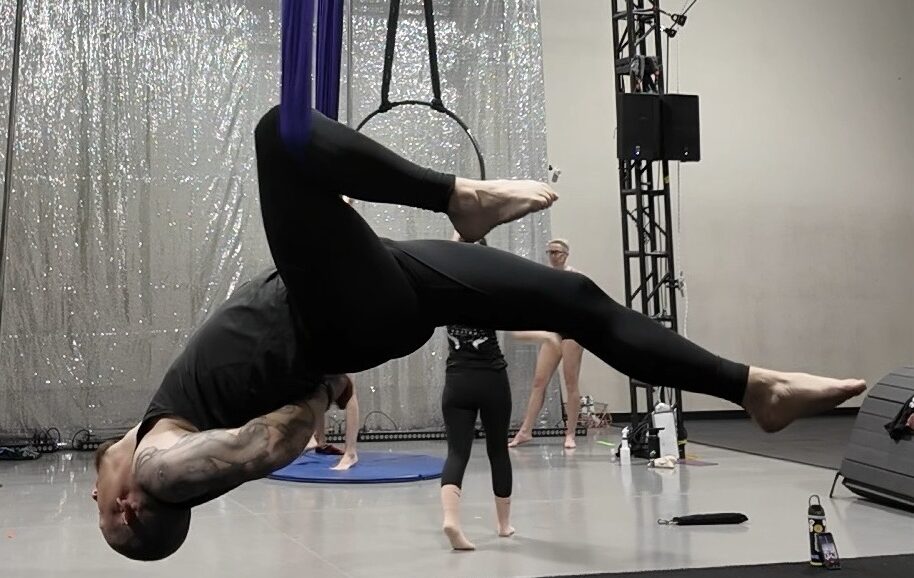
It’s just about a full year since I finally gathered up the courage to don short shorts and tights, expose parts of my body that are so white you’d need sunglasses against the glare, and flip myself upside down using only the power of my actual human muscles. And I’m still here, still doing it. Here are a few things I’ve learned in the process — about aerials and myself.
I didn’t expect to love it
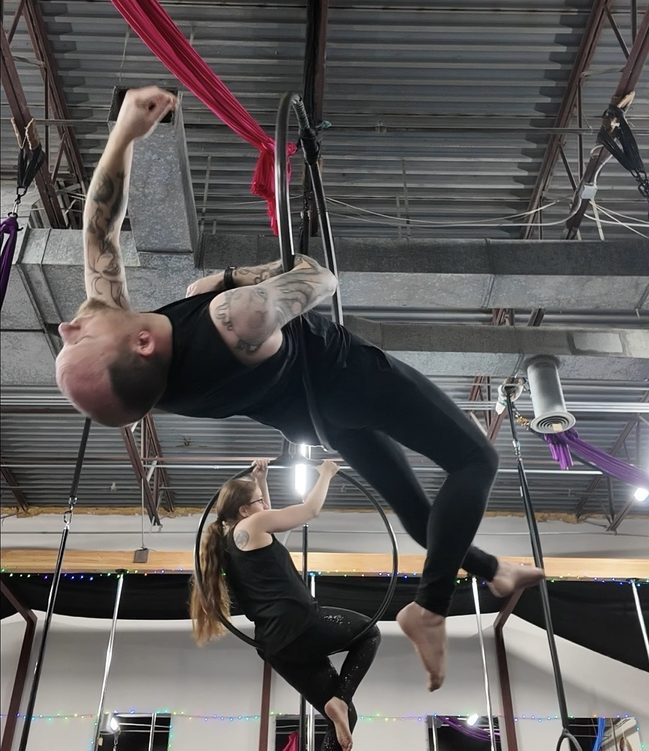
When I was driving to the studio the very first time, I expected that my reaction to my first pole class wouldn’t be much different than my feelings about exercise in general: it’s something I know I should do, that I need to do (to be active and physical and whatever), but that I would hate every minute of. When I drove away that night, muscles tight and sore, body humming with endorphins and accomplishment, I couldn’t wait to go back.
It’s easy to be intimidated. Aerials is hard frickin’ work. Metal is an unforgiving material. So are poured concrete floors, for that matter. Fabrics seem more forgiving until you realize that they are secretly a giant, constricting snake that wants to deprive your body of its circulation before it devours you. Everyone else is younger, fitter and better than you. Every time you finally feel like you’ve gotten comfortable and pass off into the next level, you immediately realize you know nothing and everything is hard again. Repeat.
But I don’t think there’s any other experience I’ve had where I’ve put my trust — my physical safety — into my own hands, literally, and come out the other side, not only still intact, but having accomplished some unlikely circus maneuver. Do you feel physically strong? Are you amazed at what your body is capable of on the regular? I imagine folks that hit the gym might relate. I’m a 47 year old, unathletic computer nerd who plays Dungeons & Dragons in their spare time. Feeling physically powerful is not something that I’ve ever been particularly familiar with.
Also? It’s fun as shit. Hanging upside down is pretty nice, not gonna lie. The best part of climbing up an apparatus is being high and knowing that you are able to support yourself. Some moves literally feel like magic, like they shouldn’t actually work.
It’s good for your brain
My mental health has benefitted tremendously from doing aerials. Now, this isn’t specific to aerials: doing any physical activity is good for mental health. When our bodies are in a non-stop stress response, it processes everything as a threat. We haven’t evolved to deal with threats by staring at a computer and not moving. We evolved to deal with a threat by running away or fighting the threat. That’s why the best way to deal with stress is to do something physical: run, work out, whatever.
I feel…lighter…than before I started doing aerials. Before, my moods fluctuated, I had a few strategies for recentering and destressing: going for walks or hikes outside, meditating, etc. But if I wasn’t doing those things, things would just pile up and compound and eventually you’re walking in a haze of mental static. That’s how burnout starts. Just a bunch of unprocessed stress and emotion and needing to still pretend to be human and operate machinery anyway.
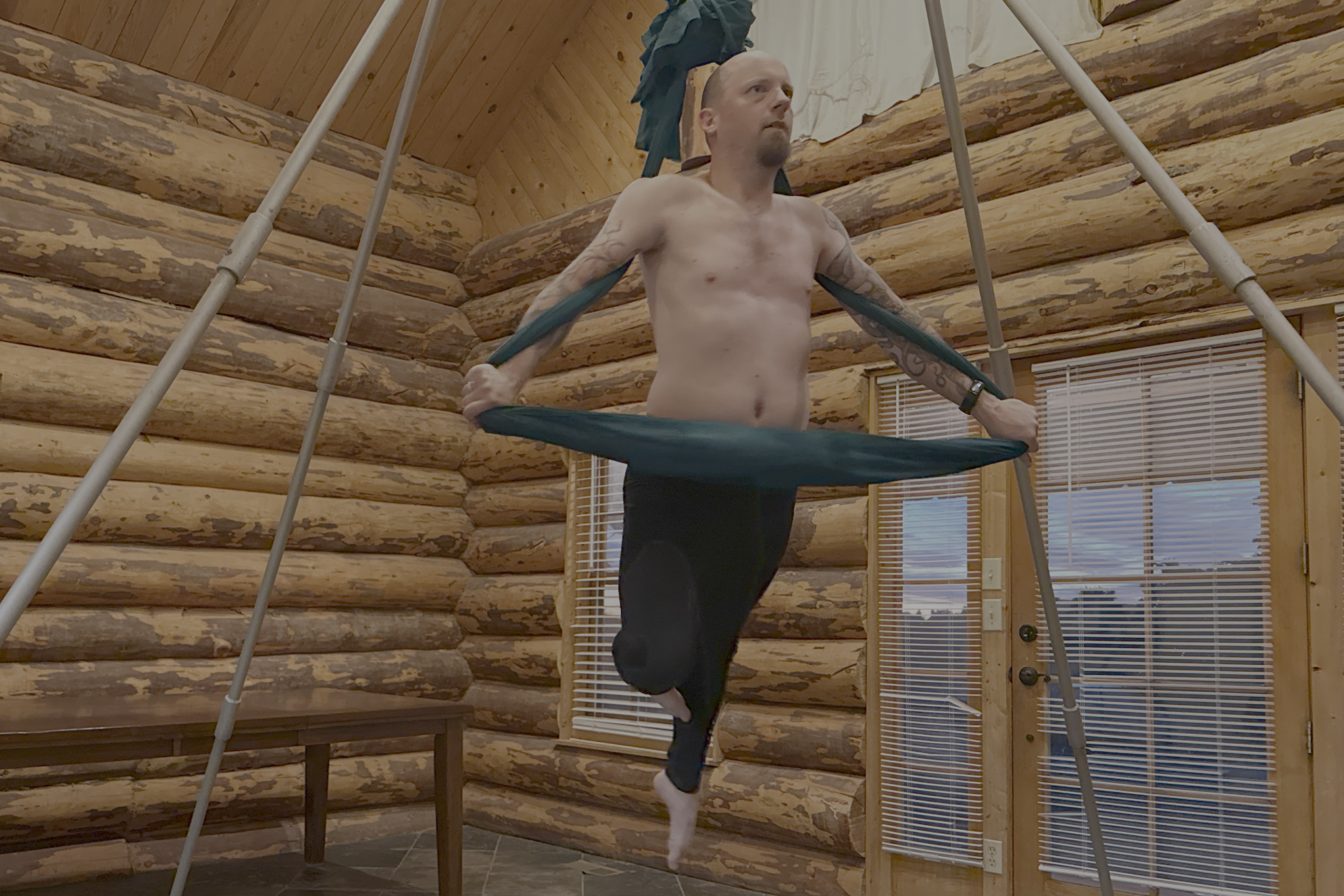
What’s more, I don’t know that they ever actually worked as comprehensively as circus has. I don’t have nearly as much brain fog as I did before. And it’s given me a strategy to cope when I do feel off or stressed. When my dad died in October, I knew I needed to do something with my body, because I knew that would help me process. And it did.
Everything is hard, always
I said earlier that circus is hard work. As soon as you get good at something, there’s always five more things you need to get good (or better) at. Maybe it’s because I grew up in the 80s and 90s but you know those old video games that never really changed, they just got progressively harder with slightly different colors? And they were addictive, not because there was a story but because your completionist brain wanted to beat the level. That’s basically aerials in real life. It’s always hard. There’s always another level. And there’s usually a prize. Sure, maybe that prize is some exciting new bruises or sore muscles you didn’t know you had, but also maybe there’s a video of you doing something you didn’t think was possible three months ago.
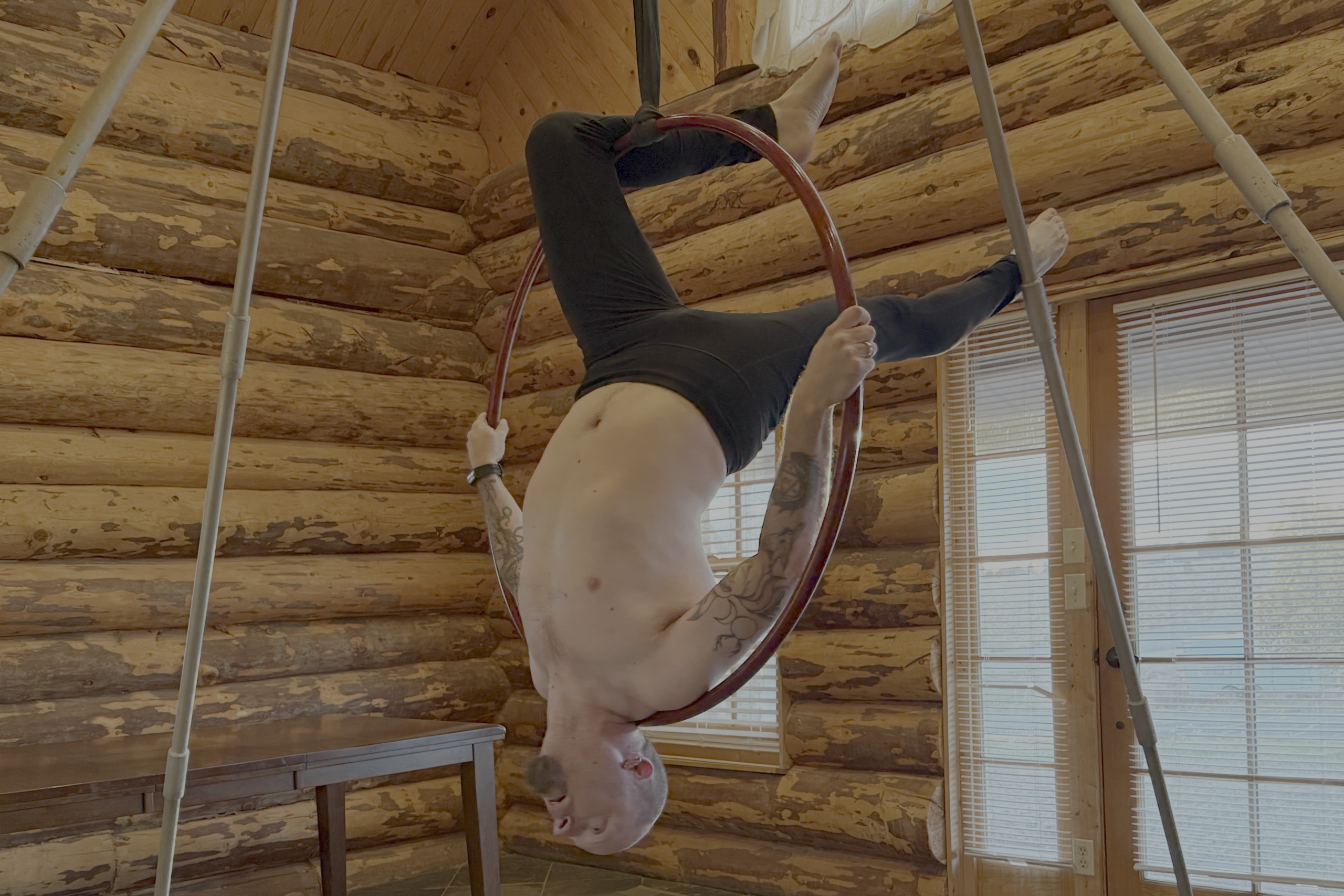
As I’m writing this, my toe has a micro-fracture from landing weird in an acro class I took with Erin for Valentine’s Day. I’m still going back. With any sport, injury is a possibility. With a lot of aerials, serious injury is possible. You need to know your limits, you need to know what you are able to do and when you’re pushing too hard, which means learning your body.
I’ve seen people go to one class and tap out, never coming back again. I’ve also seen new people show up and stick with it. And, seriously, the smiles on the faces of the newbies that stick with it…there’s a shared understanding, an acknowledgement, and a level of pride and confidence that develops from proving to yourself that you can do hard things. It’s intoxicating.
Circus is a family
Whenever circuses or “freak shows” are shown in media, the one theme that’s basically universal is this idea of found family. Whether it’s HBO’s Carnivale or the cult film Freaks, circus folk are always depicted as outsiders but loyal to each other. That’s…not fiction. At least not from what I’ve observed. I think it works on two levels.
First, it takes a certain type of person to even be interested in trying circus. It might not shock you to know that the majority of folks I know who do aerials were at least a little bit outsider to begin with. It makes sense, right? Who else watches Cirque du Soleil and, instead of just saying “wow, it’s amazing what the human body can do!” instead says “that looks like fun, I want to go there.”
I think the other thing is this shared experience, shared trials. Everyone has to go through the same process to advance even while everyone is at different stages and different speeds of their journey. Everyone has different goals and interests and apparatuses they prefer. But there’s an unspoken acknowledgement, an “I get you” that’s just there underneath everything. And it creates this atmosphere where everyone is cheering everyone else on, rooting for each other, oohing and aaahing at each other in class and liking each other’s Instagram reels.
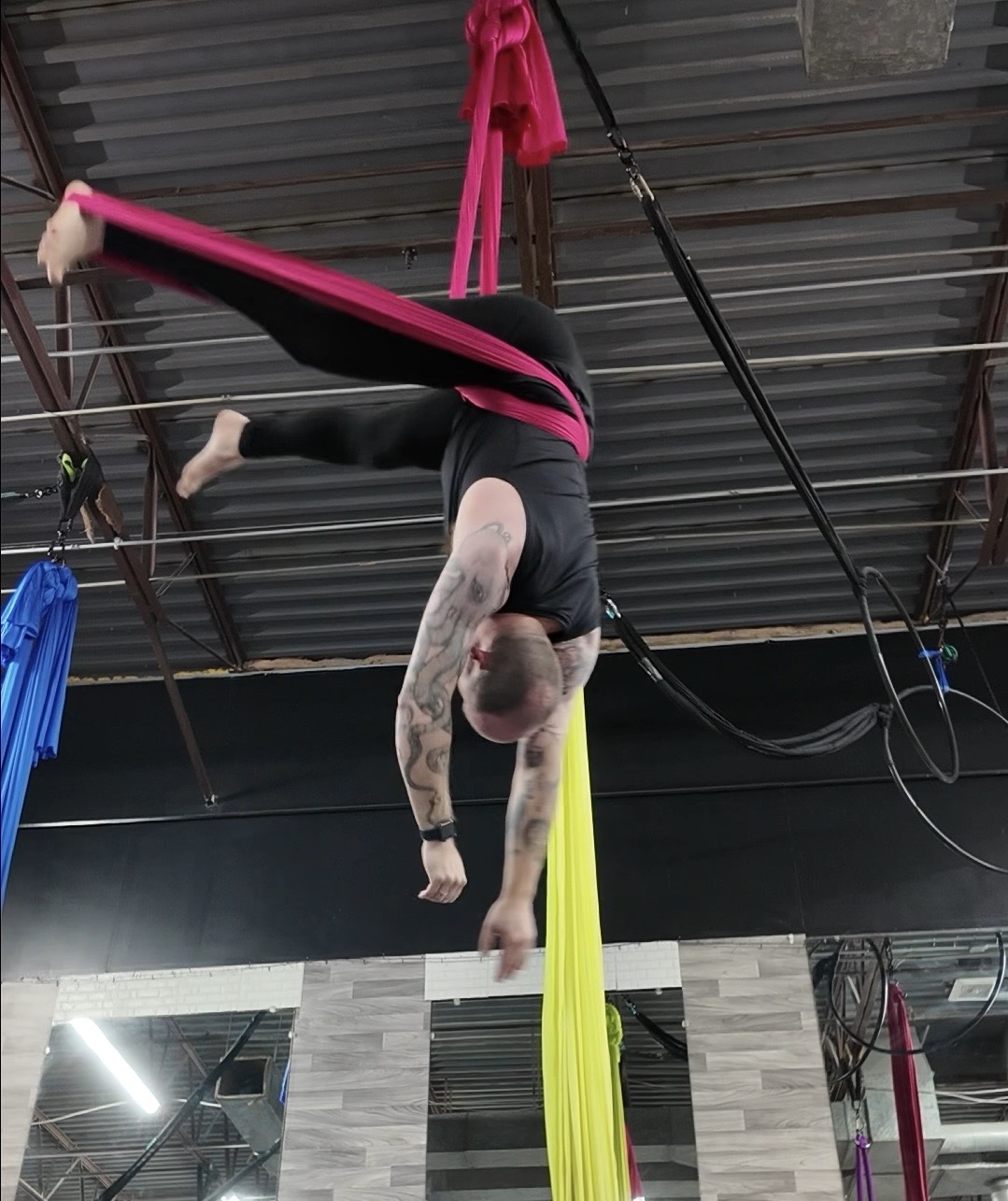
You can do it. Yes, you.
I’m a 47 year old nerd who spent most of the last 30 years not doing anything remotely physical with my body. If I can do this thing, then so can you. It doesn’t matter how old you are or what body type you have. Circus is for every body.
Even yours.
Leave a Reply